Buying cannabis clones online requires more than comparing strain names and prices. Buyers also need to understand where the plants come from, how the seller checks plant health, what happens during shipping, and whether the transaction complies with Canadian cannabis laws.
A website can look professional and still leave important questions unanswered. Product photographs alone cannot confirm genetic identity, and a healthy-looking plant is not necessarily free of pests or pathogens.
If you are researching cannabis clones online, taking time to verify the seller and review the available product information can help you make a more informed decision.
This guide explains what to check before purchasing cannabis clones in Canada, how to identify warning signs, and where to find official information about legal purchasing requirements.
1. Check Whether the Seller Is Legally Authorized
Start by verifying that the seller is legally permitted to provide the type of cannabis starting material you intend to purchase.
Cannabis regulation in Canada involves federal, provincial, and territorial requirements. The rules can differ depending on the product, the seller, the buyer’s location, and whether the purchase is for personal or medical cultivation.
Health Canada advises consumers to obtain cannabis seeds and plants from legal sources and to follow the applicable provincial, territorial, and municipal requirements.
Before placing an order, ask:
- Is the seller authorized to supply this type of starting material?
- Does the relevant provincial or territorial regulator recognize the seller or its retail channel?
- Is the seller permitted to deliver the product to my location?
- Are there specific purchasing requirements for this type of plant?
Do not assume that a seller is authorized simply because it operates a website, accepts online orders, or claims to ship across Canada.
2. Research the Supplier Before Ordering
A reliable purchasing experience starts with clear, verifiable business information.
Before buying cannabis clones online, review the supplier’s website and look for details that help you understand who you are buying from and what happens if a problem occurs.
Check Business and Contact Information
Look for a clear business identity and a practical way to contact the seller. This may include a business email, customer-service details, and relevant company information.
Check whether the product pages, policies, and contact information are consistent. If important details are missing, ask the seller for clarification before sharing payment information.
A professional website is useful, but it is not proof of legal authorization or product quality.
Review the Policies
Read the website’s shipping, privacy, refund, and order-support policies.
Pay particular attention to:
- What happens if an order is delayed?
- How are damaged or unhealthy arrivals handled?
- Is there a deadline for reporting delivery problems?
- What information does the seller collect?
- Are refunds or replacements subject to specific conditions?
Clear policies help you understand your options before paying.
Be Careful With Unrealistic Offers
Unusually low prices, unexplained fees, pressure to pay immediately, and vague product descriptions deserve closer scrutiny.
Health Canada’s online purchasing guidance also identifies missing age verification, cryptocurrency payments, and claims of shipping cannabis everywhere in Canada as potential warning signs of illegal retail activity.
No single website feature establishes legitimacy. Evaluate the seller as a whole and verify its authorization independently.
3. Understand What Makes a Cannabis Clone Healthy
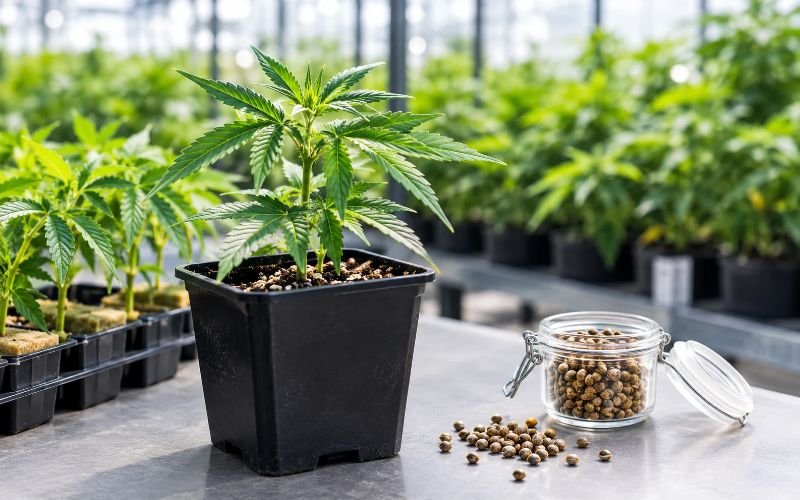
A cannabis clone is a plant grown from a cutting taken from a parent plant, commonly called a mother plant. A rooted clone has developed its own roots and can be assessed as an established young plant.
However, being rooted does not automatically mean the clone is healthy.
Review Root Development
Where root photographs or product details are available, look for evidence of root development and ask how the plant has been maintained.
The seller should be able to explain whether the product is rooted and provide an accurate description of its current condition.
A photograph may help you assess visible characteristics, but it cannot establish the complete health status of a plant.
Check for Visible Problems
Look for information about visible pests, unusual leaf discolouration, damaged stems, or other signs that may indicate plant stress.
Healthy-looking leaves are encouraging, but visual inspection alone cannot rule out every pest or pathogen.
Ask About Plant-Health Practices
Plant-health management is particularly important when purchasing clones because plant material can carry pests or pathogens from the source.
Ask how the supplier maintains its mother plants, monitors plant health, and handles suspected infections.
One relevant example is Hop Latent Viroid (HLVd), a pathogen that can affect cannabis growth and productivity. Ask whether relevant testing is performed, what the testing covers, and how frequently it occurs.
Do not treat a general claim such as “healthy plants” or “clean genetics” as a substitute for specific, verifiable information.
4. Check Genetics and Product Information
A strain name alone does not establish the exact genetic identity or characteristics of a cannabis clone.
When comparing products, look for clear descriptions and ask the supplier to explain any information that is missing or unclear.
Useful questions include:
- What strain or genetic line is being offered?
- Is information about the genetic lineage available?
- Are the listed characteristics based on supplier documentation?
- Does the product description accurately state whether the plant is rooted?
- Are photographs representative of the product being sold?
Clones taken from the same mother plant generally share their genetic makeup, but plant development can still vary with environmental conditions and plant health.
Be cautious of claims that guarantee a specific yield, potency, growth rate, or other outcome without appropriate supporting evidence.
Reliable product information helps buyers compare options without relying entirely on marketing language.
5. Review Shipping, Packaging, and Refund Policies
Shipping is an important consideration when buying live plants online. Packaging, handling, delivery delays, and environmental conditions can affect the state of a plant when it arrives.
Before ordering, understand how the supplier manages the delivery process.
What to Check Before Delivery
Review the stated shipping schedule, available tracking, packaging information, and any geographic restrictions.
Ask how the seller handles damaged packages or plants that arrive in poor condition. If a live-arrival guarantee is offered, check exactly what it covers.
For example, a guarantee may have reporting deadlines or require photographs of the package and plant. Knowing these conditions in advance can prevent misunderstandings.
Confirm Delivery Eligibility
Do not assume that a seller can legally ship every type of cannabis plant to every province or territory.
Verify the seller’s authorization and the applicable rules for your location before placing an order. Claims of unrestricted nationwide shipping should be checked carefully rather than accepted at face value.
6. Protect Your Payment and Personal Information
An online cannabis purchase involves sharing information that should be handled securely.
Before entering payment details, check whether the website uses a secure connection and whether its privacy policy explains how customer information is collected and used.
Look for the following warning signs:
- Requests for passwords or financial information unrelated to the purchase
- Unclear payment instructions
- Unexpected additional fees
- Pressure to pay through unusual or difficult-to-reverse methods
- No clear contact or dispute-resolution information
Health Canada’s guidance identifies cryptocurrency payments and requests for e-transfer as warning signs when evaluating potentially illegal online cannabis retailers.
Payment methods alone cannot establish whether a particular seller is legitimate. The key is to verify the seller’s authorization and use a payment process that complies with the applicable rules.
Avoid sharing unnecessary personal information, and keep your order confirmation and relevant correspondence.
7. Understand Cannabis Laws in Your Province
Cannabis laws in Canada are not identical across all provinces and territories. Minimum age requirements, retail arrangements, and rules affecting personal cultivation can vary.
For non-medical home cultivation, federal law generally permits adults of legal age to grow up to four cannabis plants per household, subject to provincial, territorial, and municipal restrictions. Some jurisdictions impose additional restrictions or prohibit home cultivation.
The rules governing personal cultivation should not be confused with those governing commercial production or selling cannabis.
For example, Ontario has specific rules concerning the legal source of home-growing starting material. Other jurisdictions may have different purchasing arrangements.
Before ordering, check the rules that apply to your province or territory and confirm that the seller is permitted to provide the particular product.
These resources provide a starting point for checking legal requirements and recognizing common warning signs.
8. A Checklist Before Buying Cannabis Clones Online
Use this checklist when comparing suppliers.
- Verify that the seller is legally authorized to provide the product.
- Confirm that purchasing and delivery are permitted in your location.
- Review the business’s contact information and policies.
- Check whether the product is rooted and accurately described.
- Ask about genetic information and mother-plant management.
- Review pest-monitoring and relevant pathogen-testing practices.
- Understand shipping arrangements and delivery restrictions.
- Read the refund, replacement, or live-arrival policy.
- Check payment security and privacy information.
- Save your order confirmation and seller correspondence.
If important questions remain unanswered, seek clarification before purchasing.
Where to Find More Information About Cannabis Clones
If you are researching cannabis clones online, use the supplier’s product information to compare available varieties, genetic descriptions, and stated plant characteristics.
Premium Cannabis Clone can be reviewed as part of that research process. Before making a purchase, verify the site’s current product information, contact details, shipping and refund policies, and legal authorization for the product and destination involved.
Do not rely on the website’s appearance or marketing claims alone. Independent verification and a clear understanding of the relevant rules are essential parts of a safe purchasing decision.
Frequently Asked Questions
Is it safe to buy cannabis clones online in Canada?
It depends on the seller, the product, and whether the transaction complies with applicable laws. Verify the seller’s authorization, review plant-health information, understand shipping policies, and use a secure payment process.
How can I tell if an online cannabis clone seller is legitimate?
Check the seller’s legal authorization, business information, contact details, policies, and product descriptions. Look for warning signs identified by Health Canada and confirm the seller’s status through relevant official sources.
What should I check before buying rooted cannabis clones?
Review the plant’s stated condition, root development, genetic information, plant-health practices, and shipping terms. Remember that visible roots and healthy-looking leaves do not prove that a plant is free of pests or pathogens.
Can cannabis clones carry pests or diseases?
Yes. Cannabis clones can carry pests or pathogens from their source plants. Ask the supplier about mother-plant management, plant-health screening, and relevant testing. Visual inspection alone cannot rule out every problem.
Can cannabis clones be shipped anywhere in Canada?
Do not assume that every seller can legally ship every type of cannabis plant nationwide. The rules depend on the product, seller, and destination. Verify the applicable requirements before ordering.
What are the warning signs of an unsafe cannabis website?
Warning signs may include missing age verification, unclear business details, vague policies, unusual payment requests, unrealistic offers, and claims of unrestricted nationwide shipping. Verify the seller rather than relying on any single indicator.
Where can I check Canadian cannabis purchasing laws?
Start with Health Canada’s official provincial and territorial cannabis guidance. Check the relevant provincial or territorial regulator for rules specific to your location.
Final Thoughts
Buying cannabis clones online safely starts with verifying the seller, understanding the product, and checking the rules that apply to your location.
Clear genetic information, transparent plant-health practices, sensible shipping policies, and reliable business details can help you evaluate a supplier. However, no product photograph or website claim can replace independent verification.
Before purchasing from any online source, confirm its legal authorization and review the available product and delivery information carefully.
Visit Premium Cannabis Clone to review its published information, and complete the necessary checks before deciding whether to proceed.